ECE Consulting Group Nov 2018 – Jul 2020 Customer Service Rep → Team Lead
Taking a support team from 15th to the top 5
Six months into a support job I was promoted to Team Lead of a 13-person team ranked 15th of 30. I watched the queue live, coached from quality assurance (QA) reviews and built a merit-based shift‑bidding system.
This case is on the role pages for Executive Assistant, Operations lead, Support.
The problem
From November 2018 I answered US loan customers over chat and email for ECE Consulting Group, on Zendesk and Zoho. In May 2019, six months in, I was promoted to Team Lead. My team of 13 ranked 15th of 30 teams on the company scorecard, which counted attendance, QA, CSAT and other measures. Shifts across the company went by seniority, and staff saw that as unfair.
What I built
- Real-time queue work, scheduling and forecasting: I watched queue levels live and adjusted the schedule to the forecast.
- Coaching from QA: I coached each agent from their QA reviews, and ran the team huddles.
- A coaching dashboard in Google Data Studio (now Looker Studio).
- Merit-based shift bidding for the company’s 200+ staff: staff picked shifts in Google Forms, and Google Sheets ranked each request by performance.
Decisions
Merit over seniority for shifts
Seniority decided shifts before, which staff saw as unfair, and it took a lot of admin to run. I built the bidding so performance decided who got first pick.
One shift as Team Lead
This is one shift in 2019, told from memory: nothing from 2018 to 2020 survives, so every screen is recreated and every grey figure is sample data.
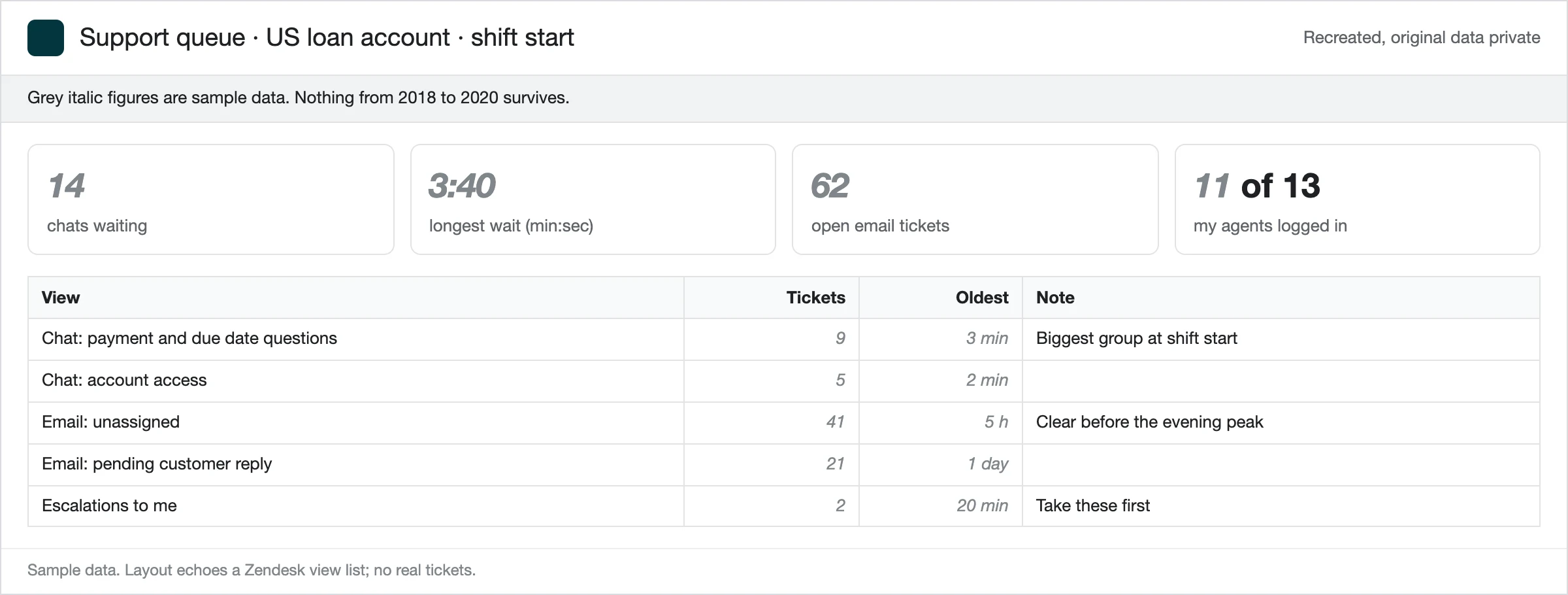
1. The queue at shift start
I opened the Zendesk views before anything else: chats waiting, the oldest wait, the email backlog and any escalation sent to me. Escalations went first, then whichever view was growing fastest. This is my own account of a 2019 shift.
2. Adjusting the schedule to the forecast
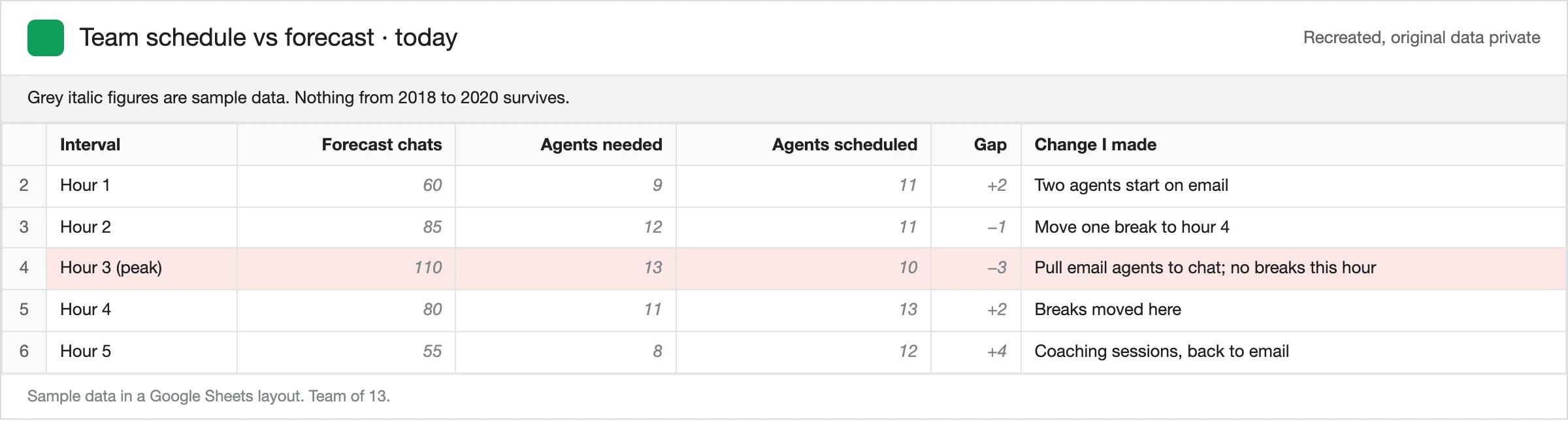
Next I set the forecast against the 13 agents on my team, hour by hour. Where the peak hour came short of agents, I moved breaks out of it and pulled agents from email onto chat in Zendesk, then sent them back to email and coaching when chats slowed.
3. A QA review used for coaching
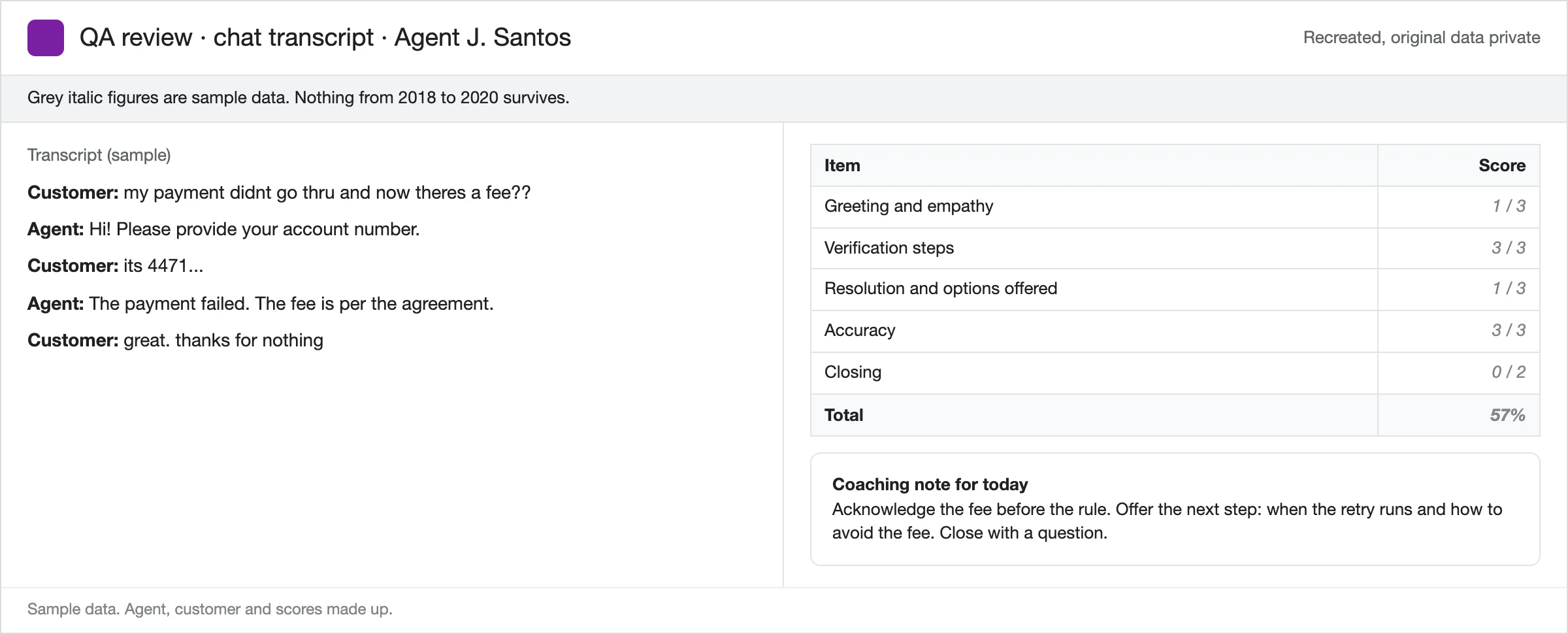
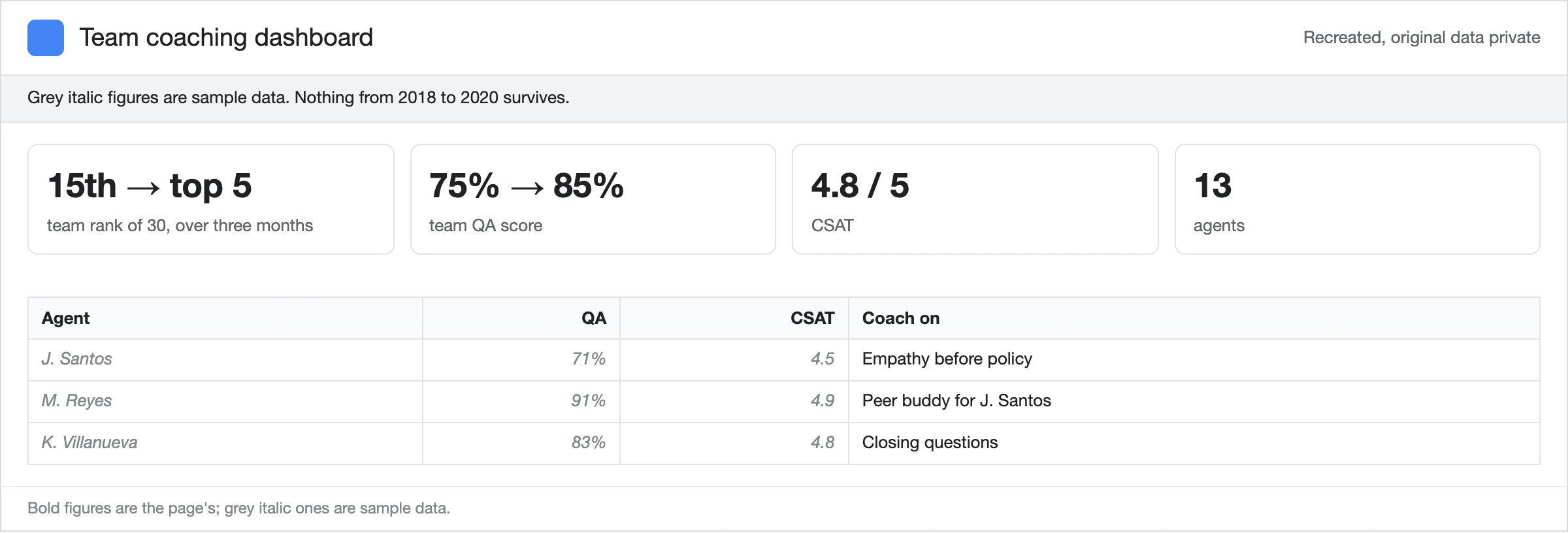
I read QA reviews of my agents’ chats and picked one habit to coach per agent. In the Zendesk chats I reviewed, the common miss was quoting the policy before acknowledging the customer’s problem. Over three months the team’s QA score went from 75% to 85%.
4. The huddle
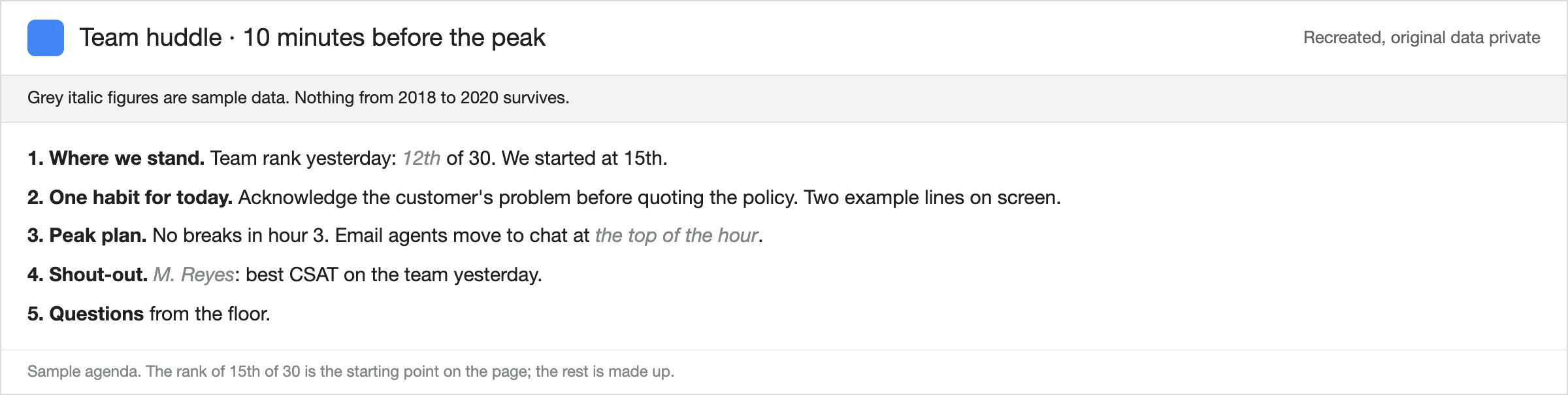
Before the peak I ran a short huddle: where the team stood against the other 29, one habit for the day, the peak plan and a shout-out. We started at 15th of 30.
5. The coaching dashboard
I built a dashboard in Data Studio so each agent’s QA and CSAT sat next to what I was coaching them on. In three months the team went from 15th of 30 to the top 5, and it held a CSAT of 4.8 out of 5.
6. The shift-bid form
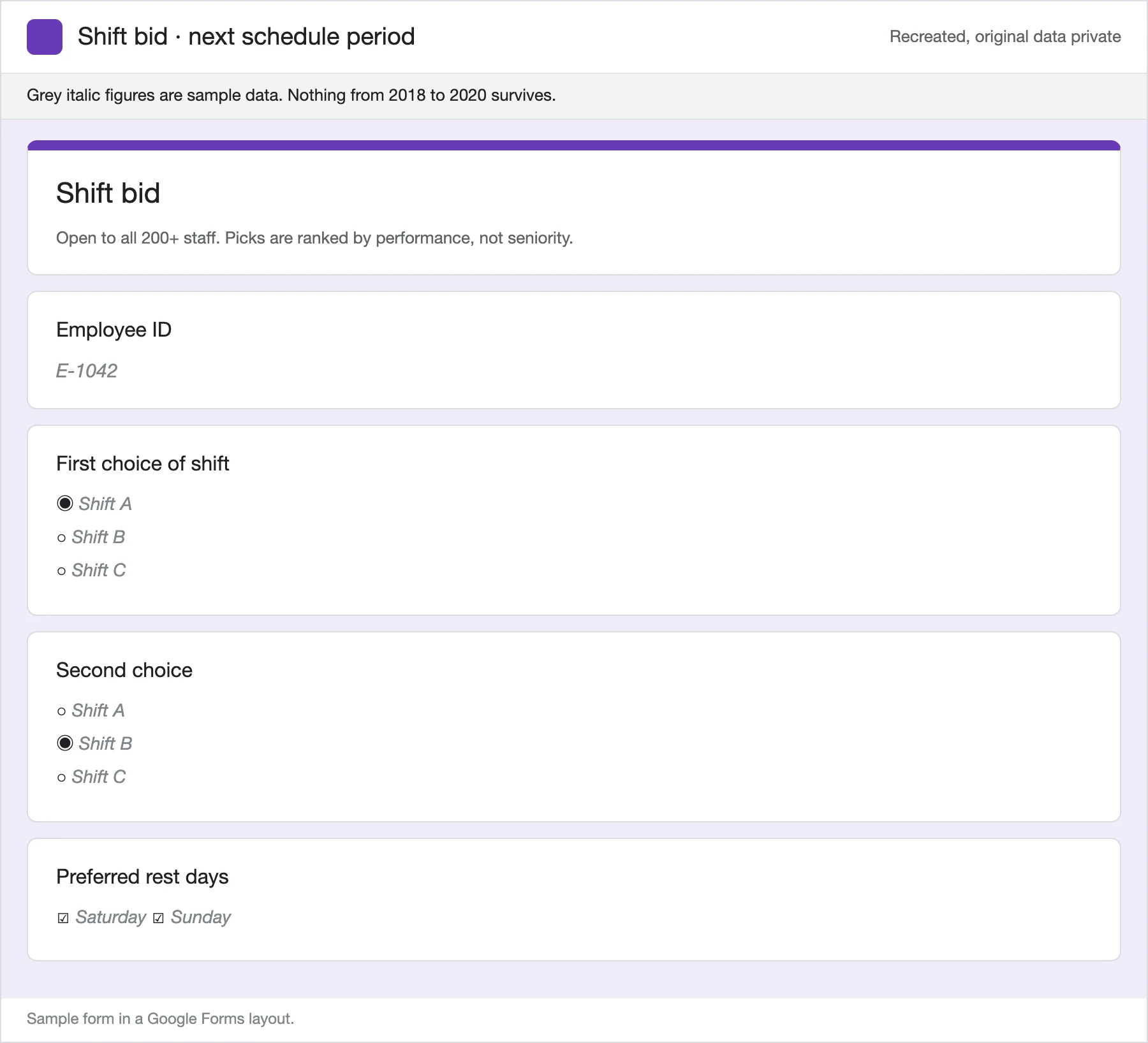
Shifts used to go by seniority, which staff saw as unfair. I built a Google Form where all 200+ staff bid for their next shifts, a first and a second choice.
7. The sheet that ranks the bids
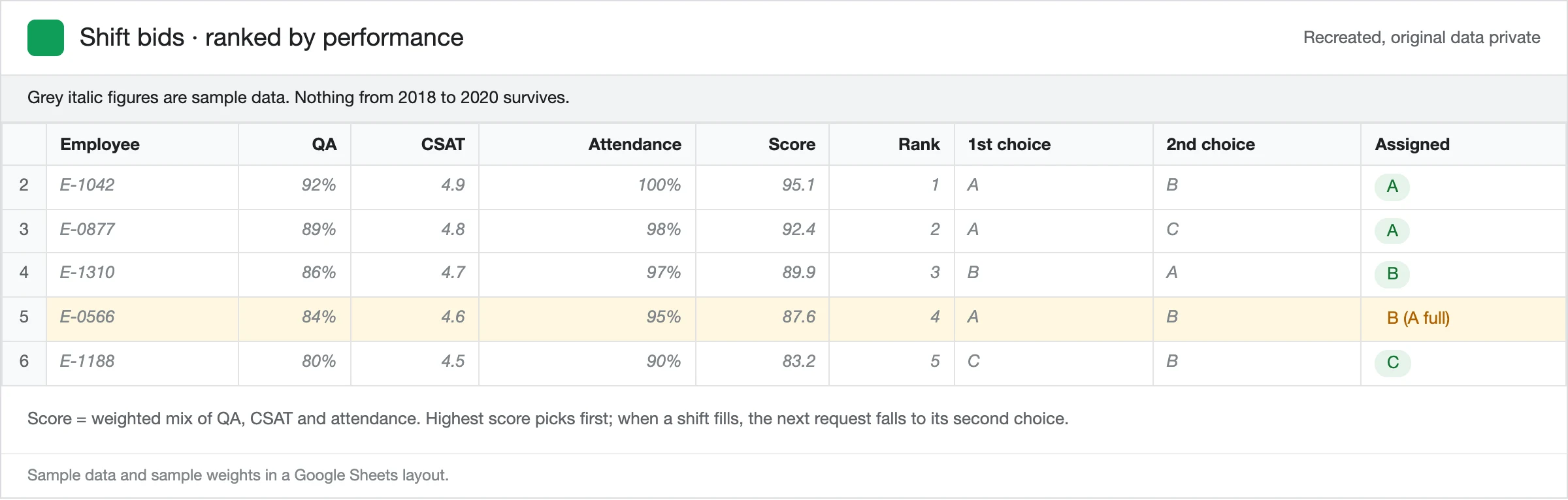
The form fed a Google Sheet that ranked every request by performance. The best performers picked first, and when a shift filled, the next request fell to its second choice.
The result
- My team went from 15th of 30 to the top 5 in three months.
- QA scores rose from 75% to 85%.
- The team held a 4.8/5 CSAT.
No scorecard from those years survives, so these numbers are my own account.
What I’d change
I’d write the huddle and coaching routine down, so the next Team Lead could run it without me.