AI content and Matchworks 2025 – present Editor and motion designer
Motion videos, from campaign edits to code
Motion graphics for user-generated content (UGC) campaigns and Instagram, then a sales video for Matchworks and personal reels animated in HTML with HyperFrames.
This case is on the role pages for Marketing.
“That’s pretty fucking cool I’m not going to lie Christian!!”
The problem
In October 2025 I moved to the CEO’s AI content work, making UGC campaigns (ads in the style of a customer’s own video) and Instagram content. In 2026 Matchworks needed a sales video, and editing every frame by hand was too slow to keep up.
What I built
- UGC and Instagram motion graphics: for the CEO’s campaigns.
- A Matchworks sales video: scripted, voiced and animated in code with HyperFrames, a tool that turns a web page into video.
- Personal reels: used to test pacing, captions synced to the voice and transitions before they go into client work.
Decisions
Never time-stretch a voice
When a cut ran long, I changed the words, the pauses or the ElevenLabs voice speed, and never stretched the recorded voice to fit, because stretching a voice breaks its quality. I set that rule on 9 October 2026.
Product shots redrawn as cards
After the fifth cut of the platform video I said the pages still looked screenshotted. So I redrew each product shot as a card with made-up data instead of a screenshot of the live app, and checked every render for real names before it went out.
One video, from Mike’s ask to YouTube
The Matchworks sales video took 4 days from Mike’s message on 7 October 2026 to the cut now on YouTube, with one rebuild in the middle.
1. The ask
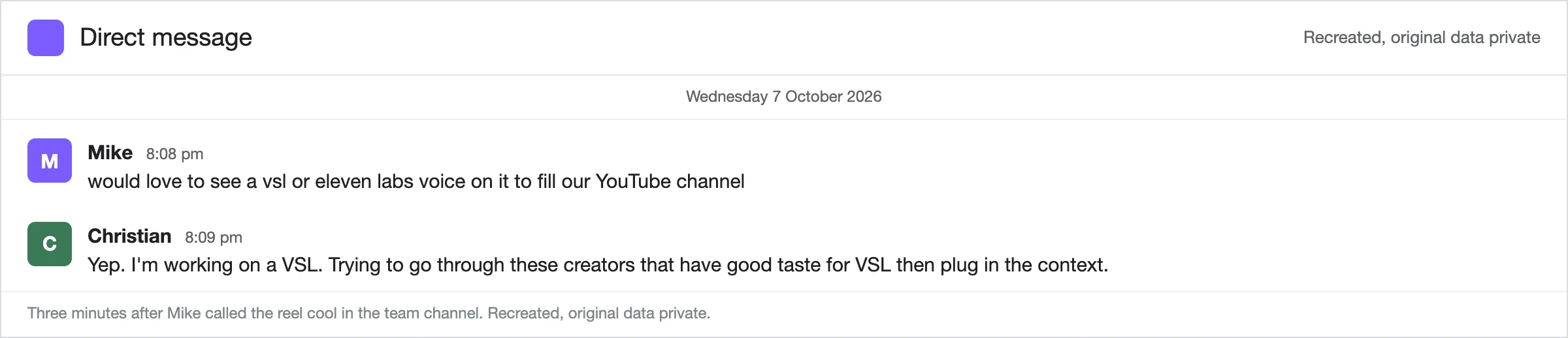
On 7 October at 8:08 pm Mike wrote that he would love a VSL, a video sales letter, to fill the YouTube channel. That came three minutes after he called my first reel cool in the team channel. I answered at 8:09 pm that I was working on one.
2. The script
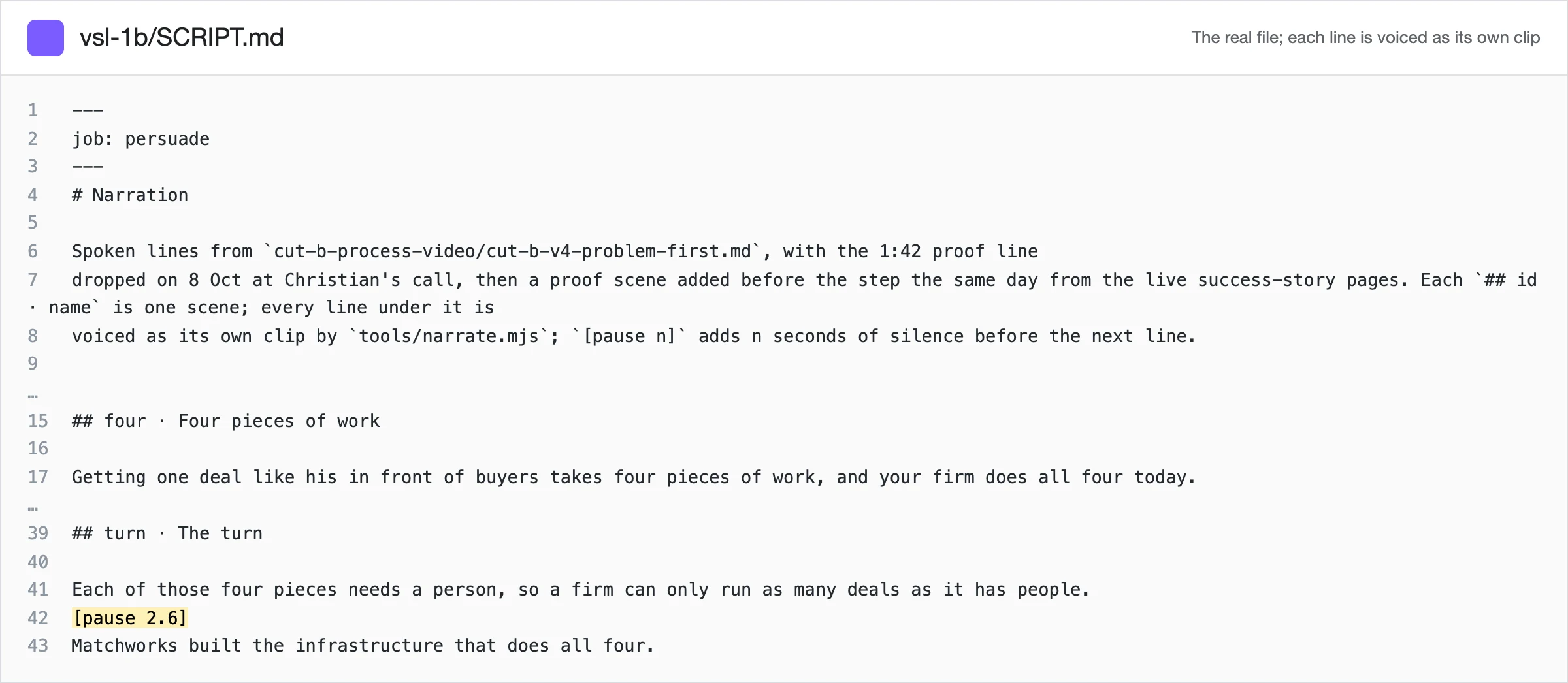
That night I studied 73 videos by one VSL writer, then took the script through four versions. In the file each scene is a heading and each line is voiced as its own clip, so a pause like the 2.6 seconds before “Matchworks built the infrastructure” is one line of text.
3. The voice
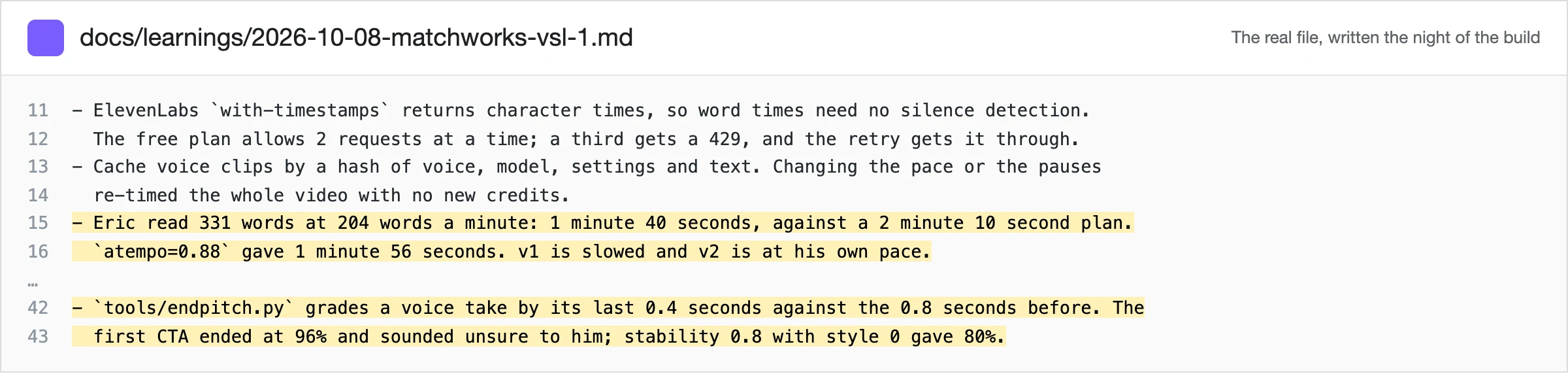
The ElevenLabs voice read 331 words in 1 minute 40 seconds against a 2 minute 10 second plan. My first cut slowed it to fit; I asked for his own pace in the next cut instead. The closing line ended on a rising pitch, so I measured its last 0.4 seconds and re-voiced it from 96% down to 80%.
4. The scenes in HyperFrames
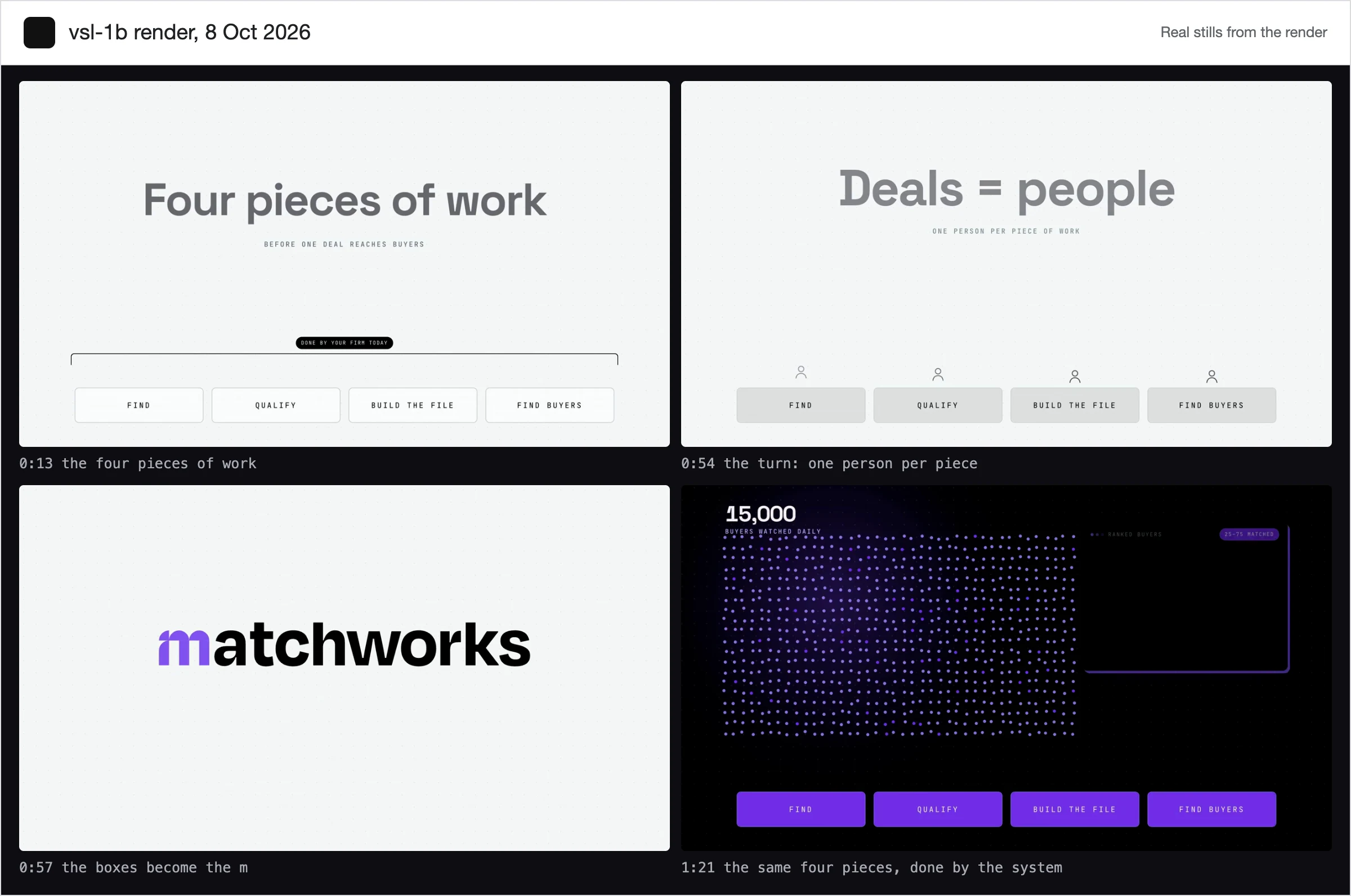
Every scene is HTML animated in code. The problem half shows the four pieces of work in grey, then 57 seconds in the four boxes lift and become the m of the wordmark, and the second half runs the same four pieces in brand colour.
5. Checking the turn frame by frame
I read the turn as a strip of frames before each render. The first try pasted the reel’s opening into the gap; it looked slapped on, so the brand moment now grows out of the four boxes the viewer has watched since the 10-second mark.

6. The first cut, and the real ask
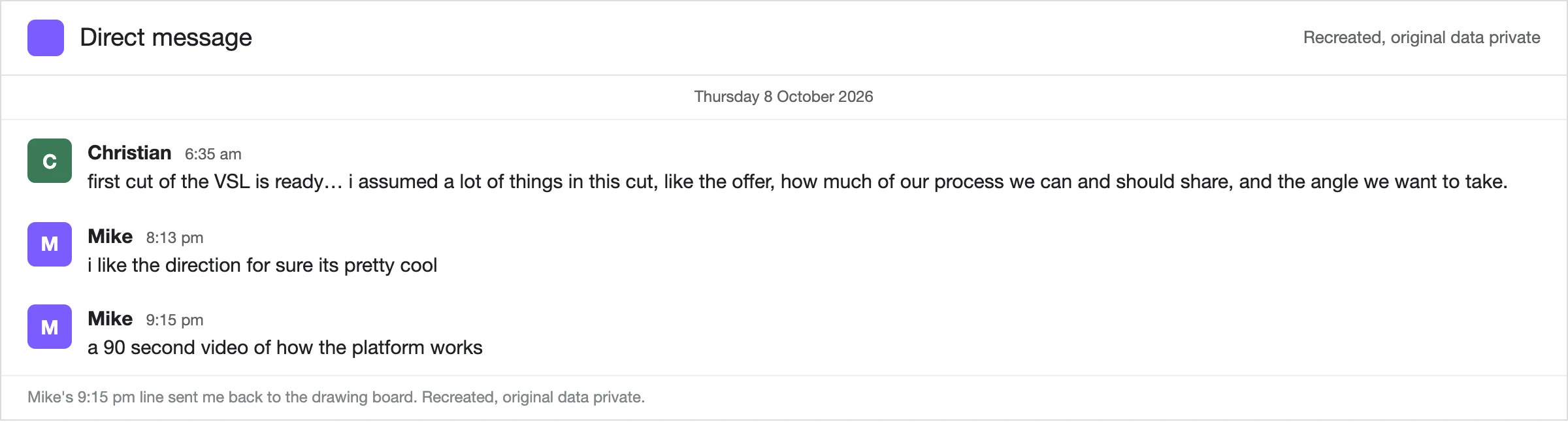
I sent the first cut at 6:35 am on 8 October and said I had assumed a lot. At 8:13 pm Mike liked the direction. At 9:15 pm he named what he wanted: a 90-second video of how the platform works. So I rebuilt it from his notes.
7. The cut on YouTube
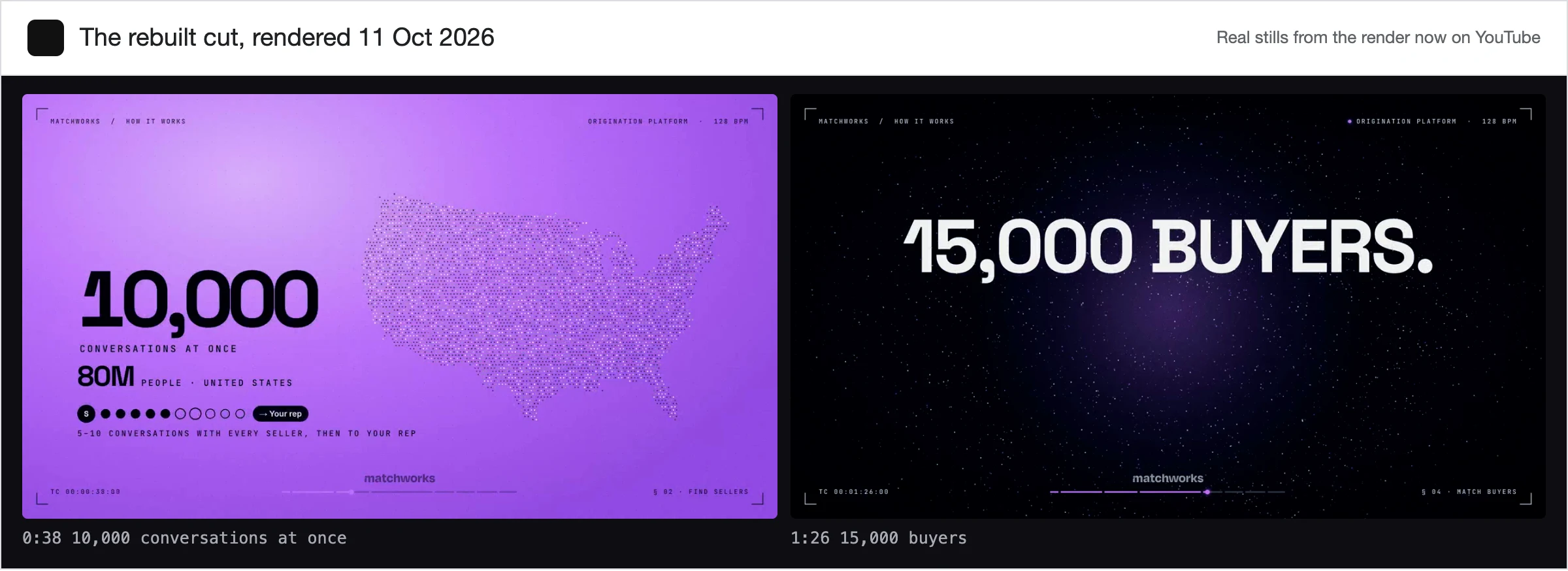
The rebuild went through four rounds of fresh readers and two new openings. The one I kept was rendered on 11 October at 3:14 am, 2 minutes 9 seconds long, and I put it on YouTube on 10 November.
The result
- After the first reel, posted at 12:37 am on 7 Oct 2026, Mike asked for a video sales letter, then on 8 Oct for a 90-second video of how the platform works. That platform video is the one above.
- On 6 Nov Mike put a motion video for the matchworks.ai homepage second on the list of three projects he set for me.