Personal Oct – Dec 2025 Builder
Rebuilding my site-scoring tool as a production system
In late 2025 I rebuilt my 2024 site-scoring tool as a batch system with job queues, a live dashboard and a three-step AI filter, built with Claude Code from specs I wrote.
The problem
My 2024 site-scoring tool worked, but it was one script on one server: one list at a time, no record of past jobs, and no way to see progress. I wanted to learn how a production system is built by rebuilding it properly.
What I built
- A job queue (NestJS, BullMQ and Redis), so large lists run in batches and several jobs can wait their turn.
- A three-step filter. The first step drops sites by domain type, the second drops pure publications after fetching the page, and the third has an AI model (Gemini or OpenAI) read the page and decide.
- A live dashboard showing each job’s progress and queue position.
- CSV exports by decision, confidence and the step that dropped a site.
- Hosting on Railway, with the data in Supabase and pages fetched through ScrapingBee.
How I built it
I wrote the specs and broke them into stories and phases. Claude Code wrote most of the code, and I reviewed it, deployed it and fixed what broke. The repo has 147 commits from 13 October to 15 December 2025.
The same list through the rebuild
The 33 sites from the 2024 tool’s page went through the rebuilt code on my Mac on 10 November 2026, with its real screens and a stand-in for the database and the AI.
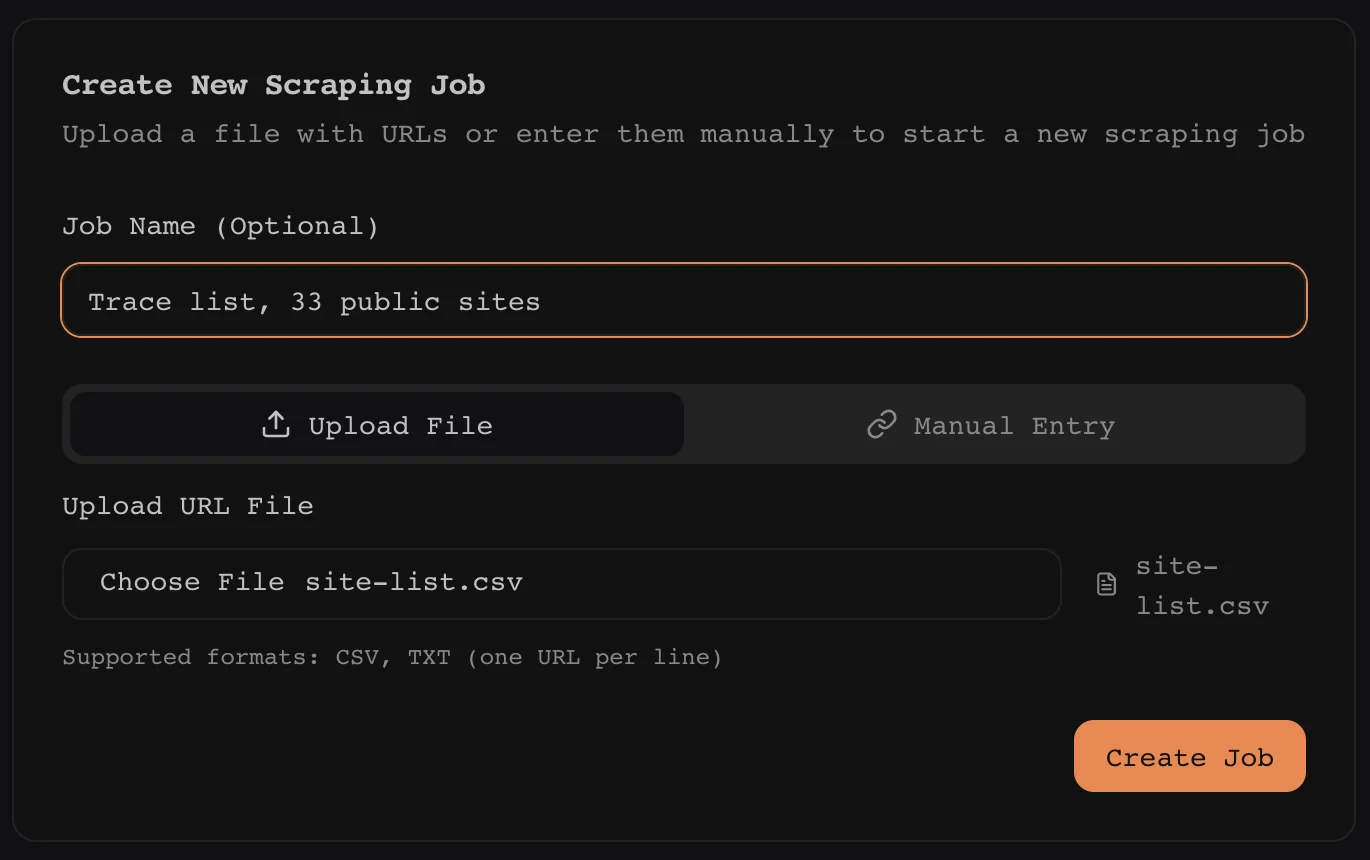
1. A new job
I name the job and upload the same file, or paste the addresses. Layer 1 runs as the job is created, before anything is queued, because it needs no page fetch.
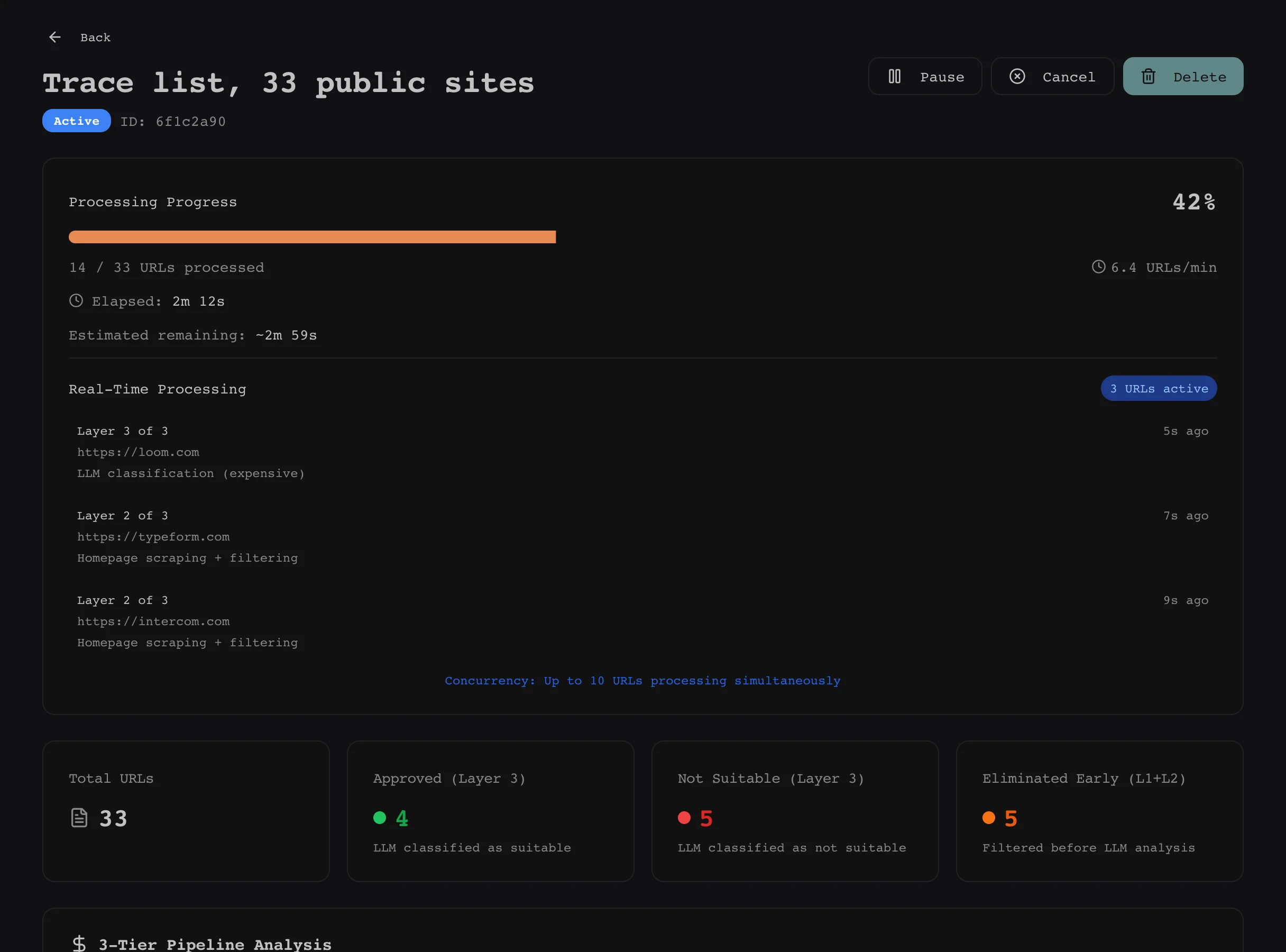
2. The live dashboard
The job page shows each running site and its layer, the share done, the rate, the time left, and running counts of approved, not suitable and dropped early. Up to 10 sites run at once.
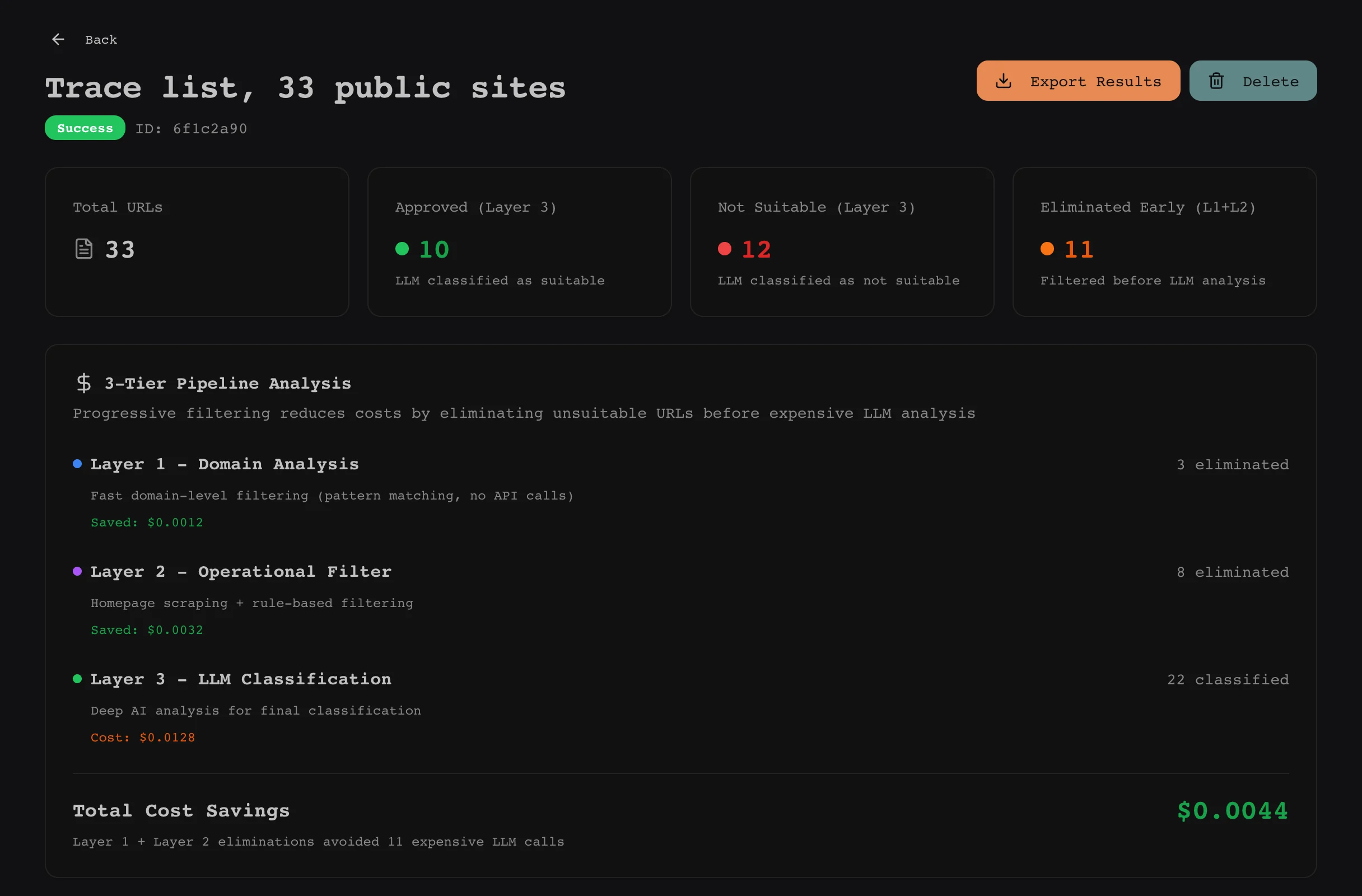
3. The funnel
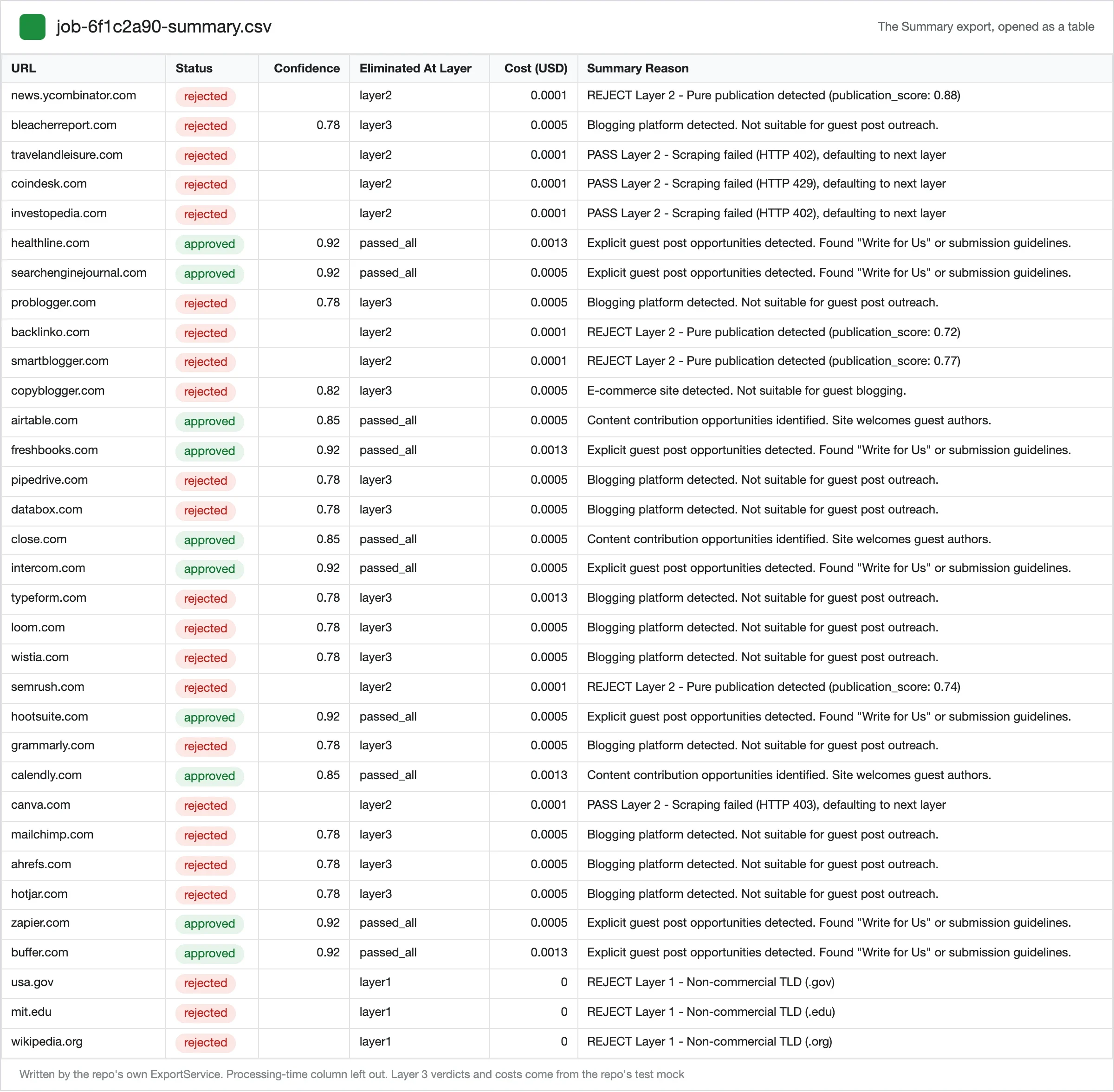
Layer 1 dropped 3 sites on their domain type alone: wikipedia.org, mit.edu and usa.gov. Layer 2 fetched homepages and dropped 8: four read as pure publications, such as news.ycombinator.com and backlinko.com, and four that blocked the fetch. Layer 3 read the other 22 and approved 10. In 2024 GPT judged the bare address, so healthline.com went out on the word “health” in its name. Here the topic call waits for the page read.
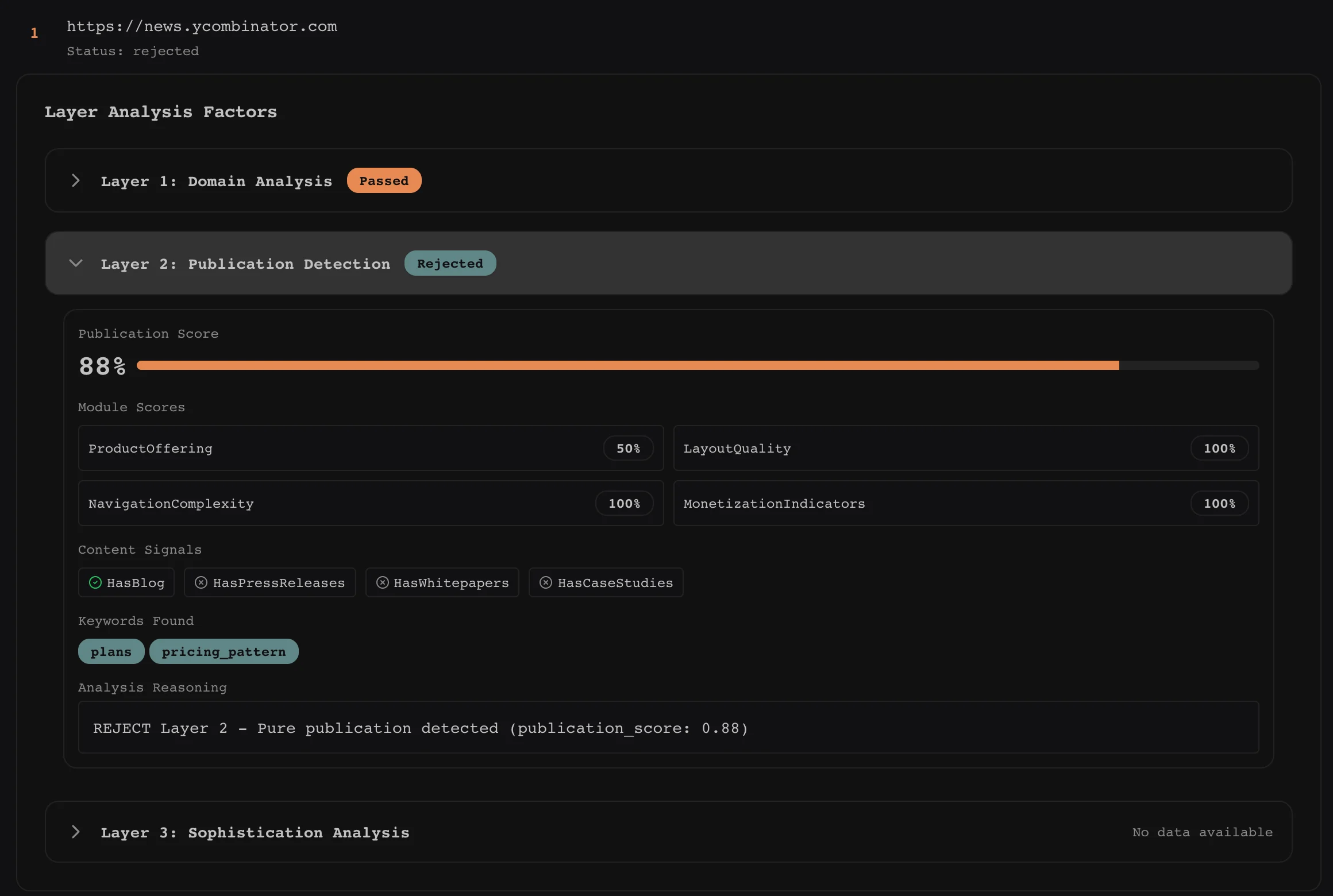
4. Why a site was dropped
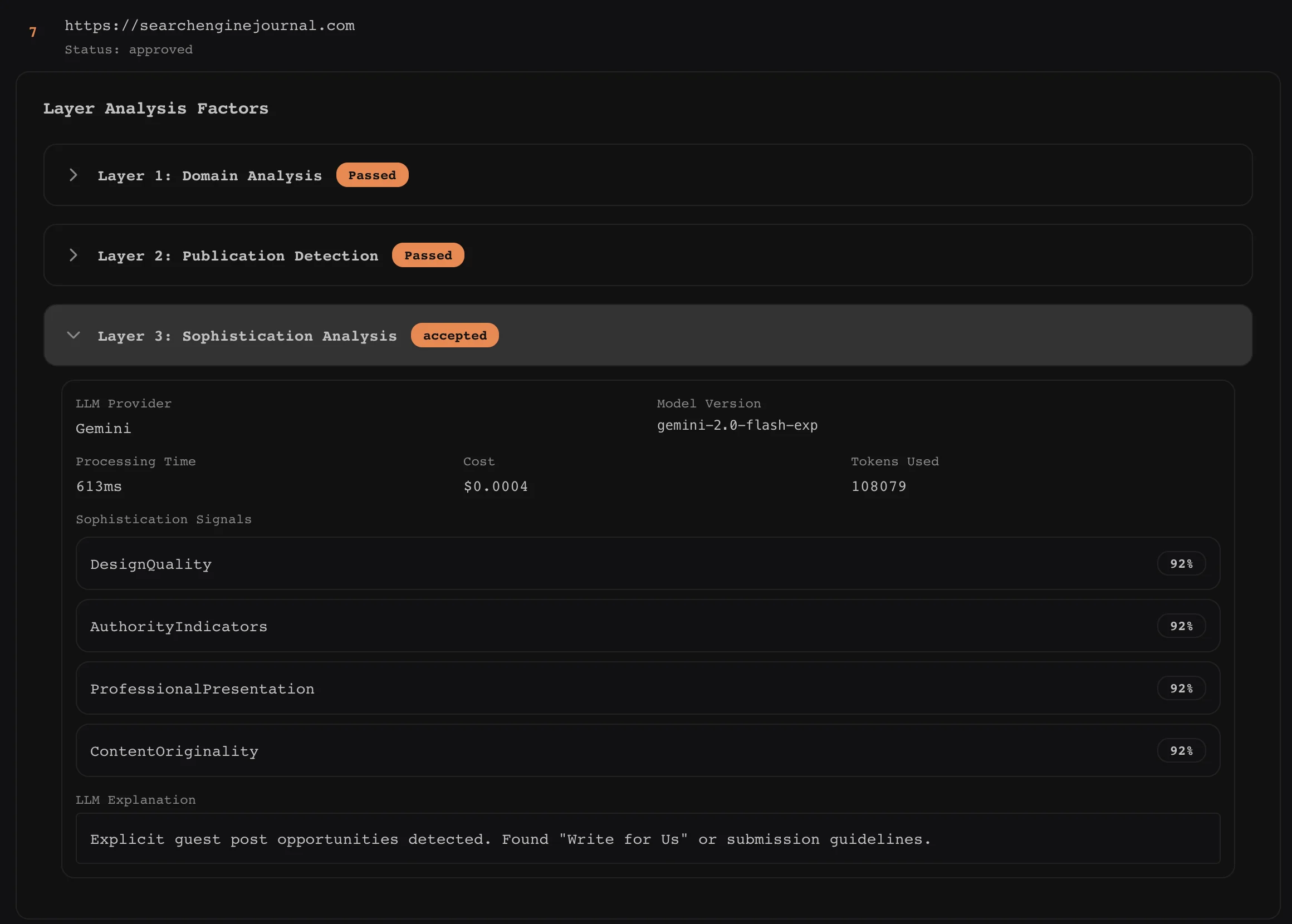
Every row opens into its layer factors. news.ycombinator.com scored 0.88 on Layer 2’s publication check, above the 0.65 limit, so it stopped there and never cost an AI call.
5. The AI read
Sites that pass Layer 2 go to Gemini, with OpenAI as the fallback, and the row keeps the provider, model, cost, token count and the reason. A score of 0.8 or more is high confidence.
6. Export
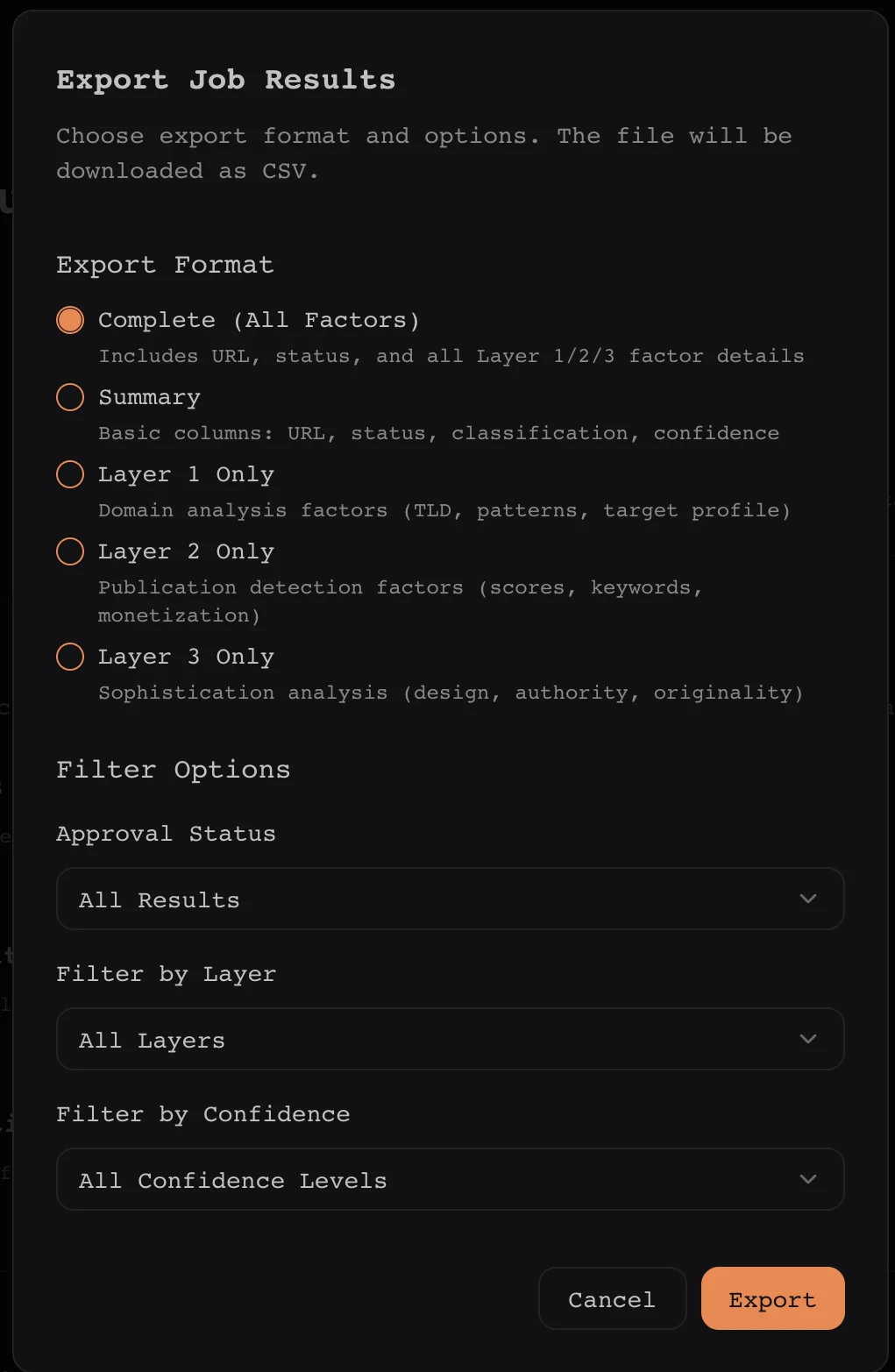
The export lets the team pick the full file or a summary, or one layer’s factors, and filter by approval, layer or confidence.
7. The CSV
The summary export has one row per site with its status, confidence, the layer that dropped it and the reason. The team works from the approved rows.
The result
It has run on real lists of tens of thousands of URLs. My last change, on 15 December 2025, cut how many ScrapingBee credits each page used.