How I work
Table of Contents
This page is for an owner deciding whether to hand me part of the business, with a link to the case study behind each claim.
What you’ll see from me
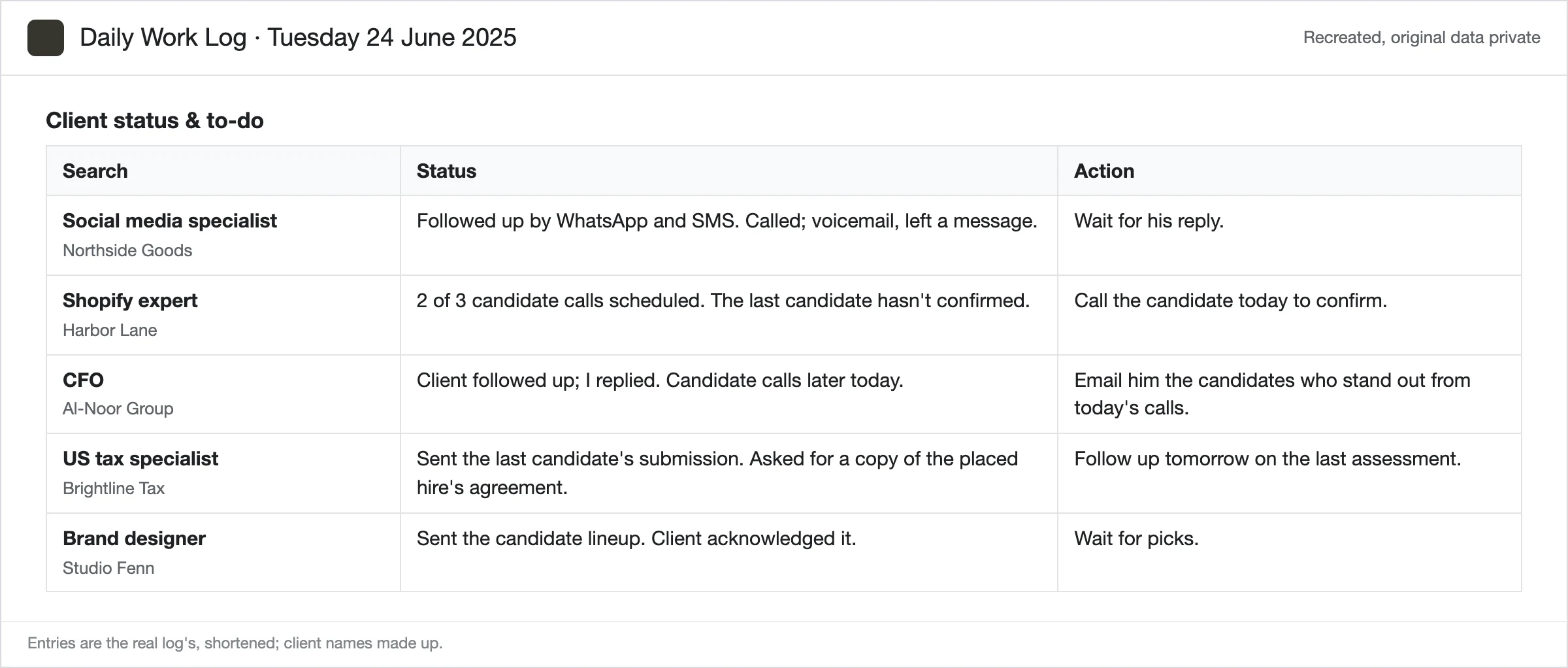
A written report at the end of every shift
What got done, the numbers, and what’s blocked.
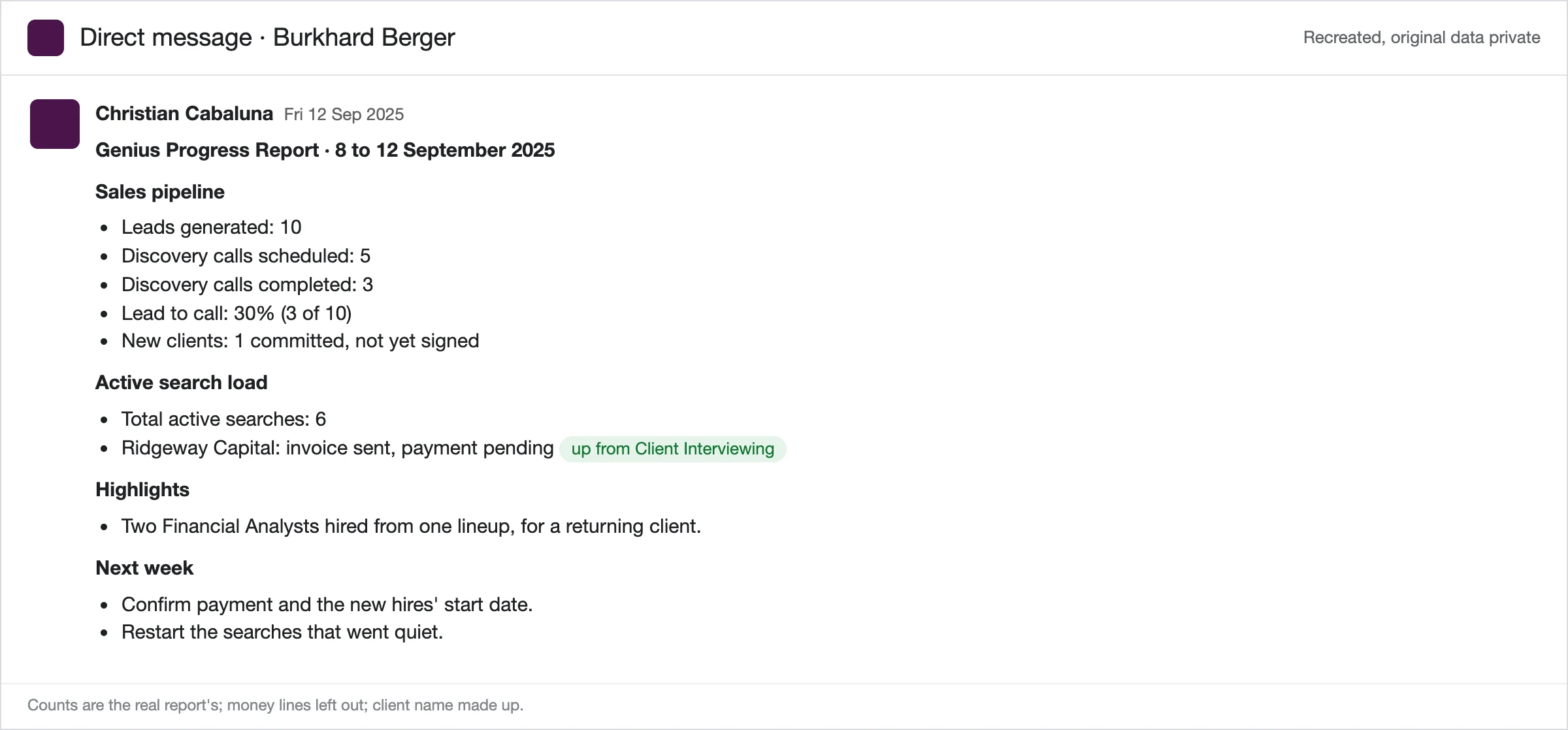
A weekly report on your key numbers
From August 2025 the Genius CEO got one from me every week.
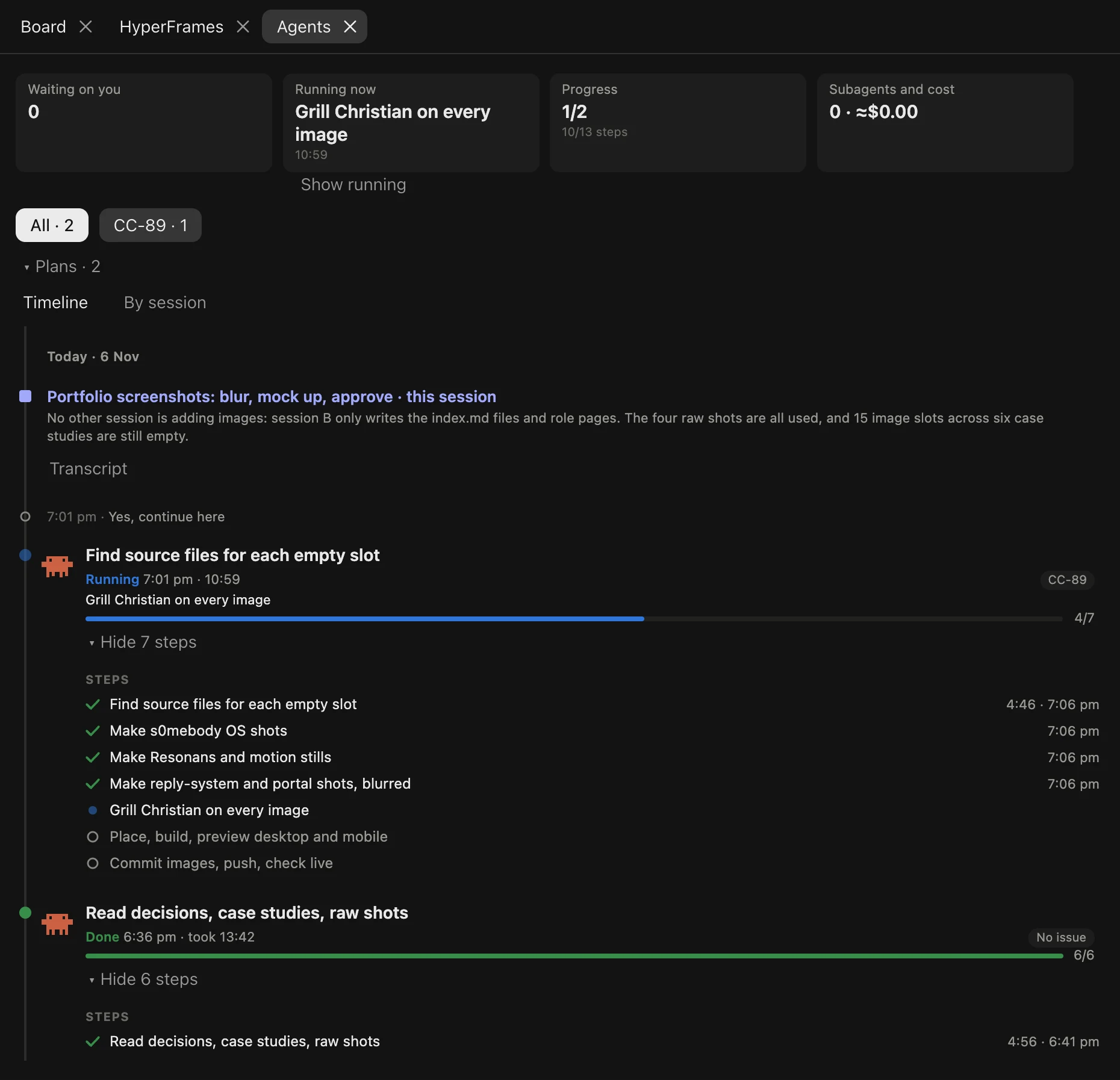
One ticket per piece of work
In Linear or the tool you already use, closed with what happened and what’s left.
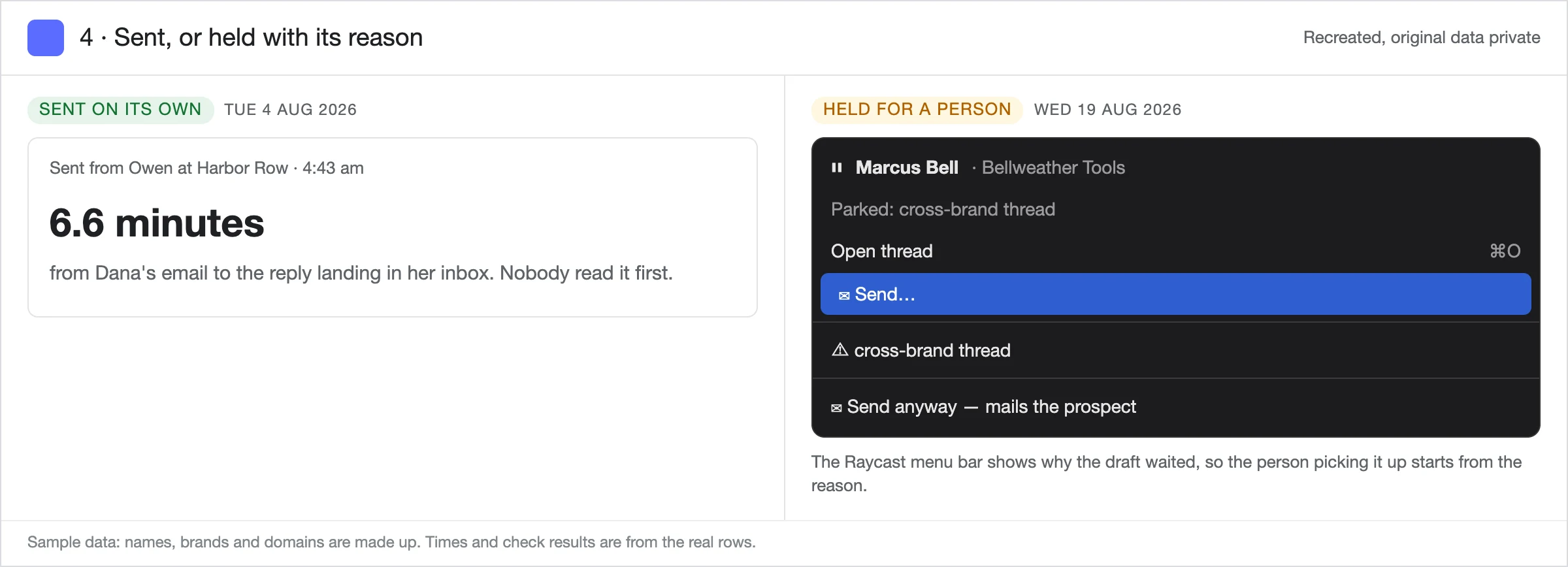
A written reason when a person is needed
At Matchworks a held reply showed why it was held, so the reviewer read one line and not the whole thread.
Written steps for anything I take over
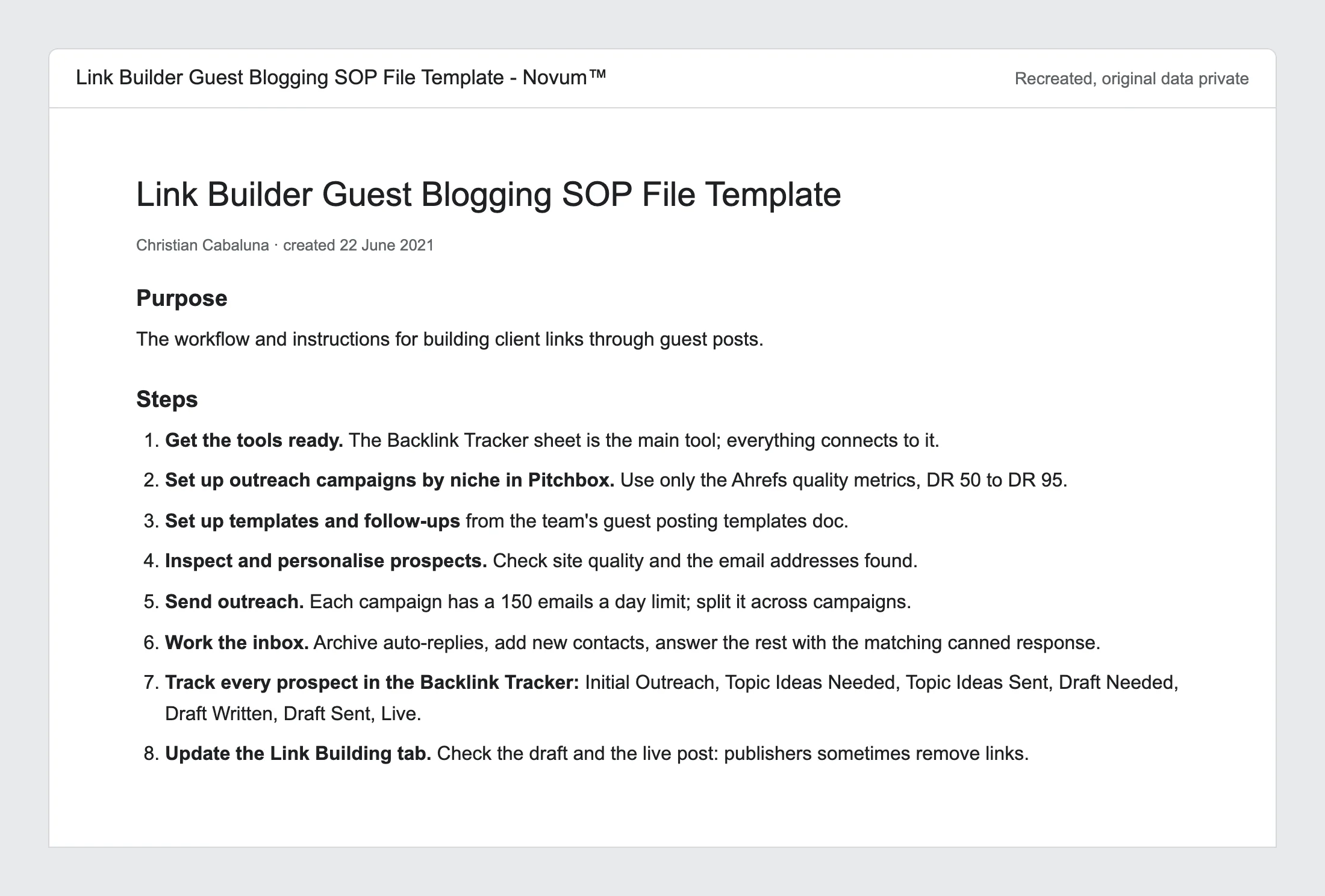
An SOP (standard operating procedure), so another person can run it without me. I wrote the guest-post SOP (June 2021) and the traffic projection SOP (November 2021) at Novum, and the client onboarding checklist (November 2024, reused for every placement after it) and the fulfilment email templates (January 2025) at Genius.
How I decide
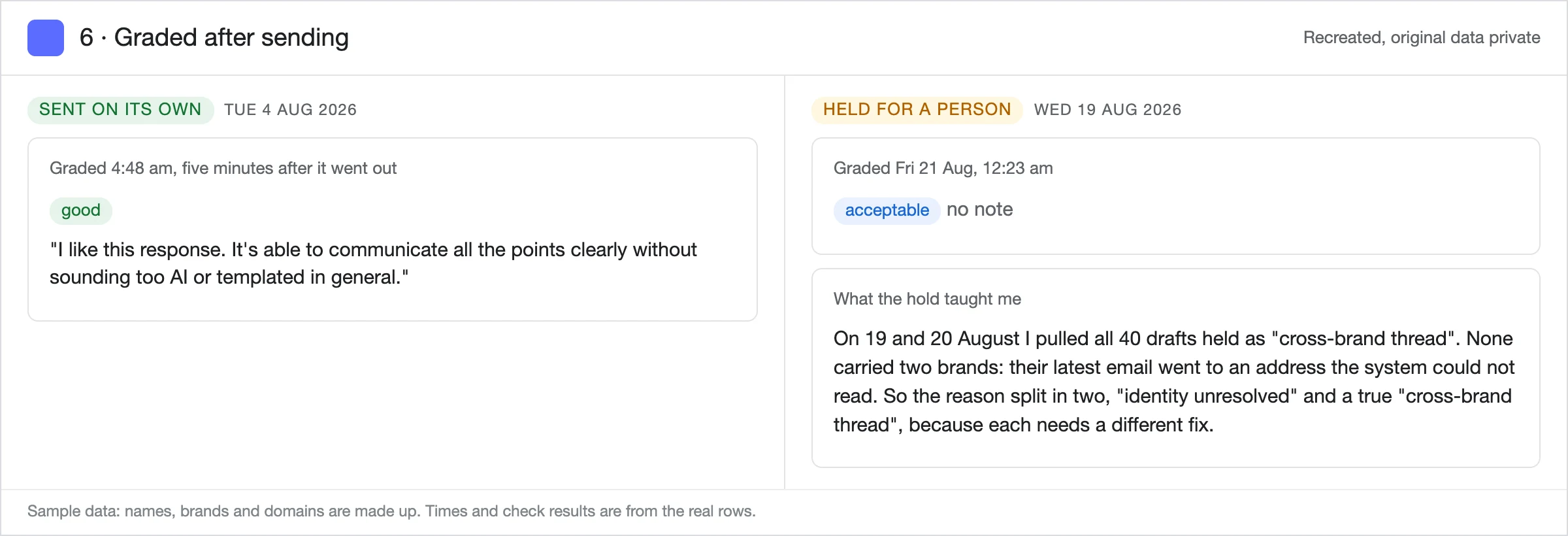
- Do it by hand first. At Matchworks I read every reply draft myself until 28 July 2026, before any reply went out on its own. Reply system case study
- Grade what went out, not a status. From then on I read and graded the replies the system sent, one at a time, and marked 6 wrong of 324. Reply system case study
How I take over a repetitive process
Three steps, in this order:
- Do it by hand first, so I know where the hours go before I change anything.
- Automate the slowest step with the simplest tool that does the job.
- Keep the judgment calls with a person.
- Novum Jun 2021 to Sep 2024
- By hand
- Cold email from June 2021. Picking which sites to pitch took a day of research.
- Automate
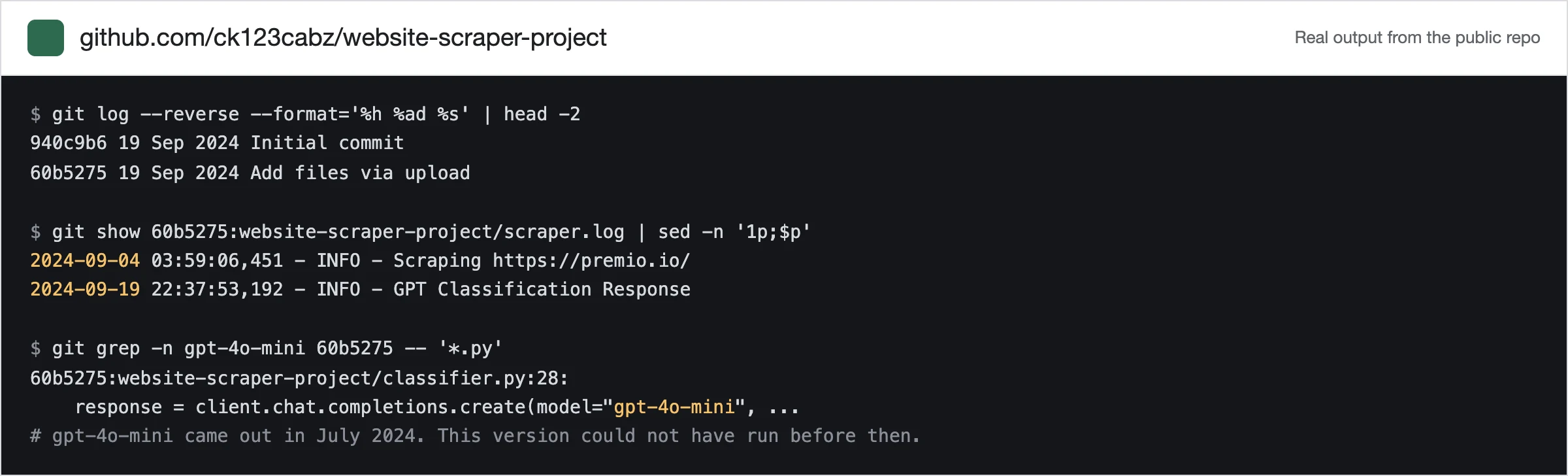
- September 2024: a tool scraped each site and had GPT say whether to pitch it.
- Person decides
- Assistants still picked the decision maker and found the email.
A day of research: 8 hours to 2–3
- Genius Oct 2024 to 2025
- By hand
- Sales calls to invoices, with a team I trained from January to May 2025.
- Automate
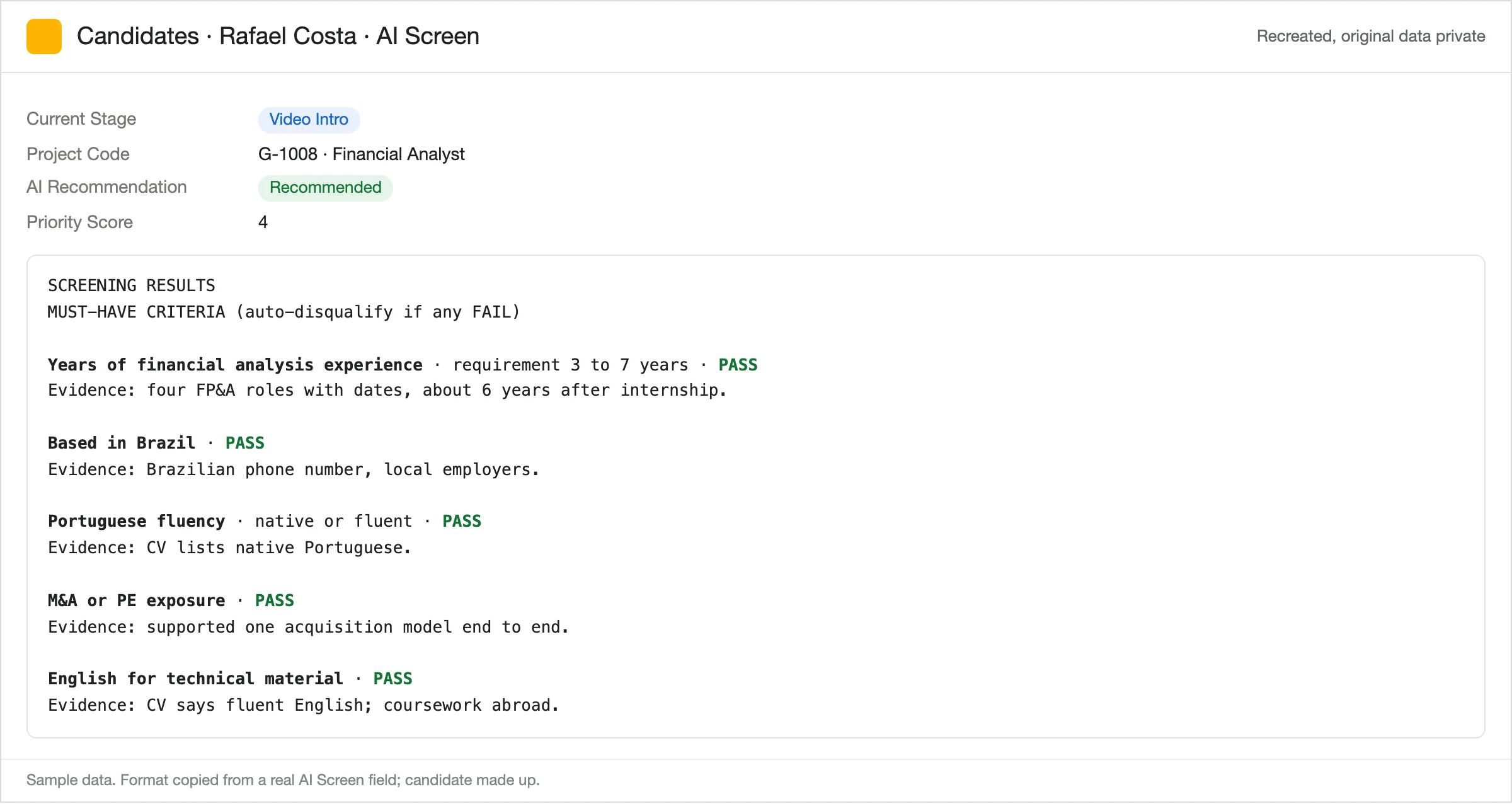
- Typeform to Notion to Airtable through Zapier, then Relay. An AI screen marked each must-have.
- Person decides
- Who to put in front of a client, the judgment the client paid for.
Brand Designer search: 912 applied, 3 endorsed
- Matchworks Jul to Oct 2026
- By hand
- I read every reply draft before it went out, until 28 July 2026.
- Automate
- From 29 July a reply sent on its own when its checks passed; the rest waited with a written reason.
- Person decides
- I graded 324 sent replies one at a time in August. 6 were wrong.
Median wait: 27.1 min to 5.6
Three take-overs, step by step
Matchworks · Jul to Oct 2026
Replies to prospects
27.1 → 5.6 min
median wait for an answer, July to October
I read every draft by hand until 28 July, then let it send when its checks passed and graded what went out: 6 wrong of 324.
Show the 6 steps
- A prospect replies to a cold email.
- The AI reads the whole thread and drafts a reply.
- Each draft runs the send checks.
- It sends, or waits with a written reason.
- Every reply leaves an audit row.
- I grade what went out.
Genius · 2025
A recruiting search, intake to report
912 → 3
applied to endorsed, Brand Designer search, Jun to Jul 2025
Relay and Airtable ran intake and screening. I chose who the client met, and the CEO got the numbers every week.
Show the 7 steps
- The client fills the intake form.
- Relay creates the Airtable client and project.
- I write the dream candidate profile.
- The job ad is written from the profile.
- The AI screen marks each must-have.
- I pick the finalists for the client.
- The CEO gets the weekly report.
This site · 9 Nov 2026
Checking my own claims
2023 → Sep 2024
the year I remembered for a tool, and the month its code shows
Before a claim goes out I check it against the record. Here the code overturned my answer and the page took the code's date.
Show the 7 steps
- 7:23 pm: I start a sweep of my notes.
- The index gives the date my own accounts gave the tool.
- 9:41 pm: a question, and my first answer.
- The repo says September 2024.
- I correct my answer.
- The settled fact goes to one file.
- 10 November: the page goes live with the repo's date.
A week with me
Genius, 8 to 12 September 2025: a log every day, and the numbers to the CEO on Friday.
- 8 Sep Daily log
- 9 Sep Daily log
- 10 Sep Daily log
- 11 Sep Daily log
- 12 Sep Daily log Weekly report
- 10leads
- 5calls booked
- 3calls held
- 6active searches
- 2hires from one lineup
How I build software
- Questions I ask until every open decision is named. You make each call.
- Written plan The settled plan is written down before any code. You read it before work starts.
- One ticket per session The plan becomes tickets, and each working session takes one. You see progress ticket by ticket.
- A second reviewer An AI agent that didn't write the code reviews it. I fix what it finds before I call it done.
- Test on a copy Tests run on a copy of your data, with the pass mark set before the test runs. Your live data is never the test.
Two rules hold across every build. A job that runs twice by mistake does nothing twice, so no double emails and no double invoices. Each fact lives in one place, so two tools never disagree about it. The full method is on the AI setup page.
Your first month with me
- Week 1: I do the work by hand, in the tools you already use, and write down each step. We pick the one number this month should move, and I record where it stands.
- Week 2: each process I take over gets an SOP (standard operating procedure), written steps your team can follow without me.
- Weeks 3–4: I automate the slowest step first. You decide which calls stay with a person.
On day 30 you get that number next to where it stood in week 1.
Terms and hours
What I’m open to: a full-time remote role or a monthly retainer, from $1,500 a month, starting with the first month above.
- US morning 9:00 am to 1:00 pm Eastern 10:00 pm to 2:00 am my time
- Sydney business day 9:00 am to 5:00 pm Sydney 6:00 am to 2:00 pm my time, October to April; 7:00 am to 3:00 pm the rest of the year
Tools I work in
Linear for tasks, Claude Code for builds, Airtable, Notion and Google Sheets for operations data, Pipedrive for a client pipeline, and Smartlead for cold email.